When people hear about a government shutdown, most think of politics in Washington, D.C. But for anyone working in construction, engineering, or development, the ripple effects travel fast. In Grand Rapids, the impact lands squarely on project management. From stalled permits to delayed reimbursements, even the best-laid construction plans can hit sudden roadblocks.
The reason is simple: many large projects depend on federal agencies at one stage or another. When those agencies pause, decisions slow down, and managers must find ways to keep the rest of the work moving. For developers, municipalities, and contractors, the question isn’t whether a shutdown matters—it’s how quickly it throws off a timeline.
Federal Shutdowns Don’t Stay in Washington
A shutdown means certain federal employees are furloughed, funding streams freeze, and communication with agencies stops. On paper, that might sound far away from Grand Rapids. In reality, it directly affects major infrastructure projects across West Michigan.
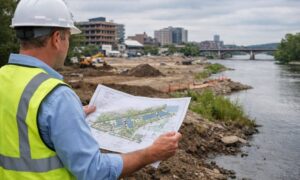
Take the Grand River, for example. Any work touching the waterway often requires U.S. Army Corps of Engineers approval. If the Corps isn’t reviewing permits, dredging, flood control, or riverfront development plans get stuck. The same goes for road expansions tied to the Federal Highway Administration. Without federal sign-offs, schedules slip, even if contractors and crews are ready.
What Stops When Agencies Go Silent
The most noticeable delays come from permits and reviews. Environmental studies under NEPA sit untouched. Section 404 or 10 permits for wetlands and waterways stall. Funding disbursements also freeze. If a project depends on federal reimbursements or grants, cash flow slows down.
On top of that, unanswered questions pile up. Contractors may need clarification from a federal office to move forward. But with staff out, no one responds. Each day without answers adds stress to schedules, budgets, and crews.
What Keeps Moving in Michigan
It’s important to note that not everything halts. Gov. Gretchen Whitmer has confirmed that Michigan’s state operations continue during a federal shutdown. Local agencies in Grand Rapids and Kent County also keep reviewing submittals. Safety-critical projects, such as urgent repairs, often move forward too.
Still, the problem comes when federal approval is part of the chain. Local or state reviews may finish, but if the final stamp depends on Washington, the entire project sits in limbo.
Why October Is the Worst Time
Early October is always a critical time for infrastructure projects. October 1 marks the start of the federal government’s new fiscal year, when budgets reset, grants renew, and contracts get awarded. If a shutdown overlaps with this period, those financial cycles freeze. That means both ongoing projects and brand-new approvals face added delays right when agencies are supposed to release funding and authorize work.
For project managers, that means both old and new projects face bottlenecks. A roadway upgrade waiting on reimbursement might not get paid. At the same time, a new subdivision design waiting for federal environmental clearance may never get off the ground. It’s a one-two punch that puts schedules at risk.
The Project Management Balancing Act

This is where strong project management shows its true value. The role isn’t just about keeping a construction crew on schedule. It’s about steering an entire team through uncertainty and finding ways to limit the damage.
When permits pause, managers look for tasks that can still move forward. Maybe site grading continues while federal approvals catch up. If funding stalls, managers prepare by adjusting billing cycles and creating temporary buffers for contractors. And if communication dries up, they make sure every piece of paperwork is ready so once agencies reopen, approvals move fast.
In short, project managers turn roadblocks into detours. They can’t erase the shutdown, but they can keep progress alive in creative ways.
Local Scenarios That Hit Home
Consider a new riverfront development along the Grand River. The design may already have city approval, but without the Corps’ permit, no one can break ground near the water. Or think about a highway improvement project tied to federal highway funds. Crews may be ready, but reimbursements won’t flow until Washington resolves its budget.
Even smaller contractors feel the pain. A subcontractor waiting for payment tied to federal funds could face cash shortages. That slows down not only the project but also local suppliers and workers.
How Clients Can Protect Their Projects
For developers and municipalities, the lesson is clear: partner with a team that knows how to manage through disruption. Federal shutdowns will always create uncertainty. But project managers with experience in civil engineering and construction know how to soften the blow.
That might mean re-sequencing the work, preparing alternative financing strategies, or communicating early with stakeholders. Clients who plan ahead save time, money, and frustration. Those who wait for Washington to reopen risk losing weeks—or even months—on their schedules.
The Bigger Picture for Grand Rapids
Grand Rapids is a growing city with constant demand for infrastructure improvements. Roadway upgrades, stormwater systems, riverfront redevelopments, and new subdivisions all depend on steady project management. Federal shutdowns may feel like temporary events, but for cities on the rise, even short delays matter.
Every day lost to politics in D.C. is a day residents spend in traffic, businesses wait for upgrades, and neighborhoods see progress slow. That’s why professional project management isn’t just about blueprints and budgets. It’s about protecting momentum in a city that can’t afford to stop moving forward.
Conclusion: A Time for Strong Leadership
Shutdowns come and go, but construction doesn’t pause forever. The key to surviving them is leadership at the project management level. In Grand Rapids, where growth pressures are already high, the difference between chaos and control often lies in the hands of skilled managers.
For clients, the message is simple: don’t let Washington gridlock derail your plans. Work with project managers who understand how to navigate delays, keep teams motivated, and deliver results even in uncertain times. With the right guidance, your project can stay on track—no matter what headlines come out of D.C.