Many homeowners assume that once a contractor fills a hole and smooths the ground, the job is done. However, that smooth surface can hide serious problems underneath. Recently, many homeowners online have shared stories about sinking patios, cracked slabs, leaning retaining walls, and settling ground after pool removal or demolition work. In many of those cases, the root cause points back to poor backfill and weak compaction. As a soil engineer, I see these problems often. The good news is that most of them are preventable. You just need the right process and the right checks.
First, What Do Backfill and Compaction Really Mean?
Backfill means putting soil back into an area after digging. This happens after trenching, foundation repair, pool removal, utility work, or wall construction. Compaction means pressing that soil so it becomes dense and stable.
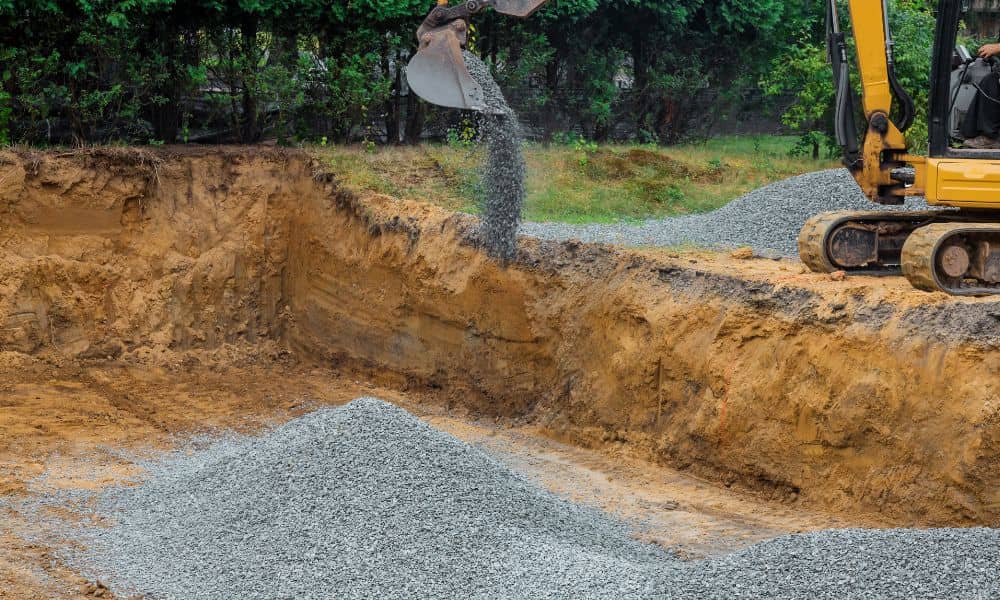
However, compaction does not mean “drive over it once with a machine.” Proper compaction takes place in layers. Crews place soil in thin lifts, then compact each lift with the right equipment and moisture level. As a result, the ground can support weight without sinking later.
Without that process, the soil stays loose. Then it settles over time. That settlement causes cracks, tilting, and drainage problems.
Mistake #1 — Thinking Flat Ground Means Solid Ground
Many homeowners judge the work by how the surface looks. If it appears flat and clean, they feel satisfied. Unfortunately, looks tell you almost nothing about soil strength.
Loose soil can look perfect on day one. Then, after a few months of rain and drying, it compresses. That’s when patios drop, walkways tilt, and slabs crack.
A soil engineer looks at density, not appearance. Crews must compact soil in controlled layers. Otherwise, gravity and water will finish the compaction later — and your structure will move with it.
Mistake #2 — Using Whatever Soil Came Out of the Hole
Contractors sometimes reuse the same soil they removed. That approach saves time and hauling costs. However, not all soil works well as structural backfill.
For example, topsoil contains roots and organic matter. That material breaks down and shrinks. Clay-heavy spoil can also hold water and soften. Both create weak support zones.
Instead, good structural backfill uses selected material. Often that means granular soil with low organic content. A soil engineer checks soil type and decides whether it fits the load needs. That step alone prevents many failures.
Mistake #3 — Skipping Layered Compaction
Proper compaction happens in lifts, not in one thick dump. Each layer usually stays thin enough for equipment to compact fully. Then crews test or verify density before adding the next layer.
However, rushed jobs often skip this step. Crews place deep fill all at once and compact only the top. The upper crust feels firm, but the lower soil stays loose.
Later, the lower layers compress under load. That creates uneven settlement. You might see one corner of a slab drop while the rest stays level.
Therefore, always ask how thick each lift will be and how crews compact each one. That simple question protects your project.
Mistake #4 — Ignoring Moisture During Compaction
Moisture plays a huge role in soil strength. Soil that is too dry resists compaction. Soil that is too wet turns soft and unstable. Good compaction needs the right moisture range.
Yet many small projects ignore this completely. Crews compact whatever sits there that day. If the soil stays dusty dry or muddy wet, density suffers.
A soil engineer checks moisture and density together. Sometimes crews must add water. Other times they must wait for drying. Although that takes more time, it produces stable ground.
Mistake #5 — Forgetting Drainage Behind Retaining Walls
Retaining walls fail more from water pressure than from weight. Still, many wall repairs and homeowner posts show the same issue: poor drainage behind the wall.
Backfill behind a wall needs proper material and drainage paths. That usually includes free-draining soil and a drain system. Without that, water builds pressure. Then the wall bows, cracks, or slides.
Homeowners often focus on the wall blocks or concrete. Meanwhile, the hidden backfill controls the outcome. A soil engineer always reviews wall backfill and drainage together, not separately.
Mistake #6 — No Testing, No Proof

Many recent homeowner complaints share one theme: “They said it was compacted, but I got no report.” That situation creates risk.
Compaction should have proof when the fill supports structures. Field density tests or similar checks confirm that soil meets target strength. Without testing, nobody knows the true condition.
Ask for documentation when fill supports slabs, footings, or walls. A soil engineer or engineering team can provide simple reports. That record helps with resale, warranty, and peace of mind.
A Very Common Real-World Scenario
Let’s look at a common case. A homeowner removes an old pool. The contractor fills the hole and grades the yard. Everything looks great at first. Six months later, the ground dips in the center. A future shed pad cracks.
What went wrong?
Usually, the crew placed deep fill too fast. They compacted only the top layers. They reused mixed soil with poor structure. No one tested density. Rain then helped the soil settle.
A soil engineer would have required layered fill, proper material, moisture control, and verification tests. That plan costs more upfront. However, it prevents costly repairs later.
When You Should Call a Soil Engineer
You don’t need a soil engineer for every small landscaping job. However, you should call one when fill supports something important.
For example:
- pool removal
- large excavation backfill
- retaining wall rebuild
- foundation repair
- new slab or addition over filled ground
Also, call if you already see settlement, cracks, or wall movement. Early review often limits damage.
Final Thoughts
Backfill and compaction may look simple, but they control how your ground behaves for years. Smooth soil does not equal strong soil. Layering, material choice, moisture, drainage, and testing all matter.
A soil engineer focuses on what you cannot see — the strength below the surface. When you get that part right, everything above it performs better. And most importantly, you avoid the common mistakes that keep showing up in homeowner horror stories online.