

When you’re planning to build a new fence or rework your yard, there’s one step many homeowners overlook — the grading plan. It’s not just a formality. A grading plan shows how water will flow across your property once your project is finished. Without one, even a small fence or patio can cause drainage problems that upset your neighbors or violate city code.
Why Grading Plans Matter Before You Dig
Think of your yard like a shallow bowl. When you change the shape of the land — even by a few inches — you change where rainwater goes. A grading plan maps those slopes and directs water away from your house, driveways, and neighbor’s yard.
In Grand Rapids, the city requires a proper drainage design if your project alters the ground or changes runoff patterns. That means fences with concrete footings, retaining walls, or raised beds might trigger review. Even without a permit, it’s smart to plan ahead so rain doesn’t back up or flood your yard.
A good grading plan helps you:
- Avoid pooling water and erosion.
- Stay compliant with city drainage codes.
- Protect your foundation and landscaping.
When in doubt, treat your fence or small structure like part of your stormwater system — because it is.
Step 1: Know Your Property Limits
Before you draw a single line, find your exact property boundaries. The easiest way is through the Kent County Parcel Viewer (iMap), available on the county’s website. Search your address, zoom in, and you’ll see your parcel number, plat, and right-of-way lines.
Don’t rely on mobile app maps or fence lines you “think” are correct. Many homeowners discover that their fence sits inside the public right-of-way or across an easement. In Grand Rapids, fences must stay at least one foot behind the street right-of-way line — not the sidewalk or curb.
If the boundary is unclear, consider hiring a licensed land surveyor. A quick survey can save you from major headaches later.
Step 2: Review the City’s Fence and Drainage Rules
Grand Rapids has specific rules for fences, and understanding them early keeps your grading plan simple. Fence height limits are six feet in backyards and four feet in front. The “finished” side — the smooth one — must face outward toward your neighbor.
But here’s the detail most people miss: you can’t block water flow. If your fence traps runoff or changes the slope between two yards, the city may ask for a revised grading plan or drainage fix. That’s why you should check your lot’s contours and keep natural drainage paths open.
If you live in East Grand Rapids, the process is slightly different. Their engineering department has separate forms and contact numbers for drainage reviews. Call before you apply — it can save weeks of delay.
Step 3: Use Local Mapping Tools for Clarity
The REGIS GIS Web App is another helpful tool for checking underground utilities and easements. You can turn on layers showing storm drains, sanitary lines, and topography. Keep in mind that these maps are for reference only — they aren’t legal boundaries.
When you look at your lot, ask yourself:
- Where does the water go now?
- What happens if I add a fence or raise the grade?
- Are there any swales (shallow channels) I shouldn’t block?
A quick look at these layers helps you spot problems before they become costly rework later.
Step 4: When You Need a Professional Grading Plan
Some projects are simple — others need a certified drawing. You’ll likely need a professional grading plan if:
- You’re filling or cutting more than six inches of soil.
- The project is near a drainage easement or storm line.
- You’re adding structures that could redirect runoff.
A professional plan from a civil engineer or land surveyor includes:
- Existing and proposed ground elevations.
- Drainage flow arrows showing where water will go.
- Spot elevations at corners, driveways, and low points.
- Notes on slope percentages (for example, a 2% slope away from the house).
These plans make it easy for reviewers to confirm your yard won’t flood or send water onto a neighbor’s property.
Step 5: Submitting Your Plan to the City
Once your grading plan is ready, submit it through the City of Grand Rapids e-Permitting portal. You’ll upload your drawing (usually in PDF) and include contact info for your designer or surveyor.
The city’s engineering team reviews plans for compliance with local drainage standards. They typically respond within 7–10 days. If they find issues, you’ll get comments to fix. Common requests include:
- Improving slope away from structures.
- Adding erosion-control notes (such as sodding or matting).
- Showing discharge points for downspouts or sump pumps.
Calling the review office before you submit can speed things up. They’re used to small residential questions and usually happy to clarify what’s required.
Step 6: Building and Maintaining Good Drainage
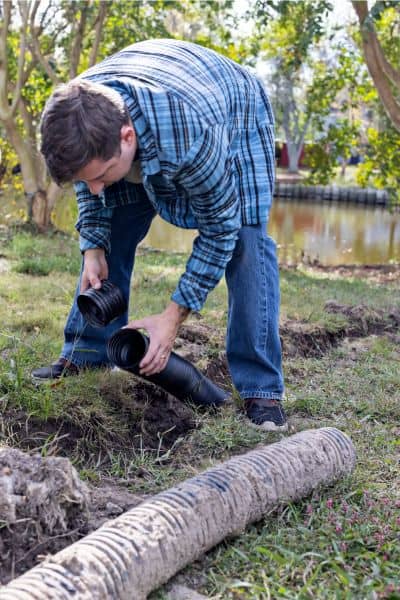
After approval, make sure your contractor builds exactly what’s on the plan. Even small field changes — like filling a low spot or adding a planter — can affect water flow.
Once construction wraps up, check your yard after the first heavy rain. Watch how the water moves. If you see standing water, low points, or flow toward your house, fix it early. Add topsoil or regrade to restore positive drainage.
Ongoing maintenance is simple but important:
Don’t block drainage with mulch beds or garden timbers.
Keep swales and yard drains clear.
Direct downspouts at least five feet from the foundation.
Step 7: When to Call in a Surveyor or Engineer
If you suspect the lot line is off or your yard drains the wrong way, it’s worth calling a licensed professional. A land surveyor can confirm boundaries, while a civil engineer can adjust slopes and update your grading plan.
They’ll ask for your deed, previous surveys, or any site sketches you have. These details make it easier to design accurate contours that align with city standards.
Getting expert help also protects you from disputes later. If drainage problems arise, you’ll have documentation showing that your plan followed professional guidance and city code.
Wrapping It Up
A fence project may seem simple, but in Grand Rapids, it’s all about managing water correctly. A well-designed grading plan keeps your yard dry, your neighbors happy, and your project compliant.
If you’re unsure where to start, work with a local surveyor or civil engineer familiar with codes. They can prepare a grading plan that passes inspection — and make sure your fence stands on solid (and properly sloped) ground.
Building smart today means fewer drainage headaches tomorrow. Before you dig, plan your grades — because good fences and good drainage make good neighbors.