How To Find Your Property On FEMA’s Flood Insurance Rate Maps

What are FEMA flood maps?
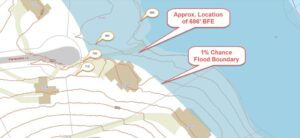
FEMA’s Flood Insurance Rate Maps (FIRMs) or just Flood Maps are provided after a flood risk assessment has been completed or updated for a community.  This study is known as a Flood Insurance Study.  The FIRM gives you the Base Flood Elevations (BFEs) and insurance risk zones in addition to floodplain boundaries.  The FIRM may also show a delineation of the regulatory floodway.

Once the “insurance risk zone”  (commonly referred to as the flood zone) is determined, actuarial rates, based on these risk zones, are then applied for newly constructed, substantially approved, and substantially damaged buildings.  FEMA uses these rates to determine the insurance rate you will pay for flood insurance

FEMA’s Digital Flood Maps

FEMA discontinued the production and distribution of paper flood maps in 2009 as part of its Digital Vision Initiative. This affected all the Flood Maps, boundary information, and study reports. However, clients can still view the products for free through their website or buy them in digital format.

To view these flood maps online, go to FEMA’s Map Service Center and key in your address (hi-lited area shown here) search for your home.  This will prompt you to then select the map that covers your area.  The Flood Maps are somewhat cumbersome to use online. It is best to go through the tutorial on the bottom right of the address search page for an easier and more effective use of the GIS map.

author avatar
Surveyor

More Posts

An engineer reviewing site plans with a client before a commercial project begins
civil engineering
Surveyor

When Should You Hire a Consulting Engineer? 

You find a commercial property in Grand Rapids. The price looks fair. The space feels right. You start thinking about what you want to build or open. That’s where many owners run into trouble. They move forward based on what they think the site can handle. Later, things don’t quite

Read More »
Two professionals reviewing a site plan together during early project planning before submission to an engineering firm
civil engineering
Surveyor

How an Engineering Firm Prepares Utility Plans

You have the land. You have a plan in mind. Maybe your builder is already asking for dates. It feels like everything should move forward. Then the city asks for a Preliminary Utility Plan. This is where many projects slow down. Not during construction. Not during final approval. Right here,

Read More »
Civil engineer reviewing site plans at a riverfront redevelopment project showing environmental engineering work near a riverbank with early stage development activity
civil engineering
Surveyor

Riverfront Projects: Environmental Engineering Risks

Riverfront land in Grand Rapids looks like a great place to build new homes, shops, and offices. The Grand River runs through the city and makes these areas feel valuable and active. At first look, these sites seem simple. The land is open. The location is good. Plans for new

Read More »
Construction manager overwhelmed with multiple tasks and project approvals causing delays in construction management
civil engineering
Surveyor

Construction Management Slows Down When Teams Are Overloaded

A project can look ready to go. Crews show up. Materials arrive. Then things start to slow down. Days pass. People wait. No one seems to have a clear answer. This is where construction management starts to break down. It usually does not happen out in the field. It happens

Read More »
Utility layout plan showing how utilities are designed in land development projects
civil engineering
Surveyor

How Utility Plans Affect Land Development Projects

Starting a project feels exciting. You have the land, the idea, and the goal in mind. Everything seems ready to move forward. But then, something slows you down. In many cases, the delay doesn’t come from permits or design. Instead, it comes from something less obvious—utility planning. If you’re working

Read More »
Excavator digging into soil during a stormwater design site inspection to check ground conditions
civil engineering
Surveyor

Stormwater Design: What Happens When Testing Fails

You find a piece of land that looks perfect. It’s flat, dry, and easy to picture your project on. So you move forward with your plans. Everything feels on track—until something unexpected slows things down. The issue? The site fails infiltration testing. This situation happens more often than most people

Read More »