
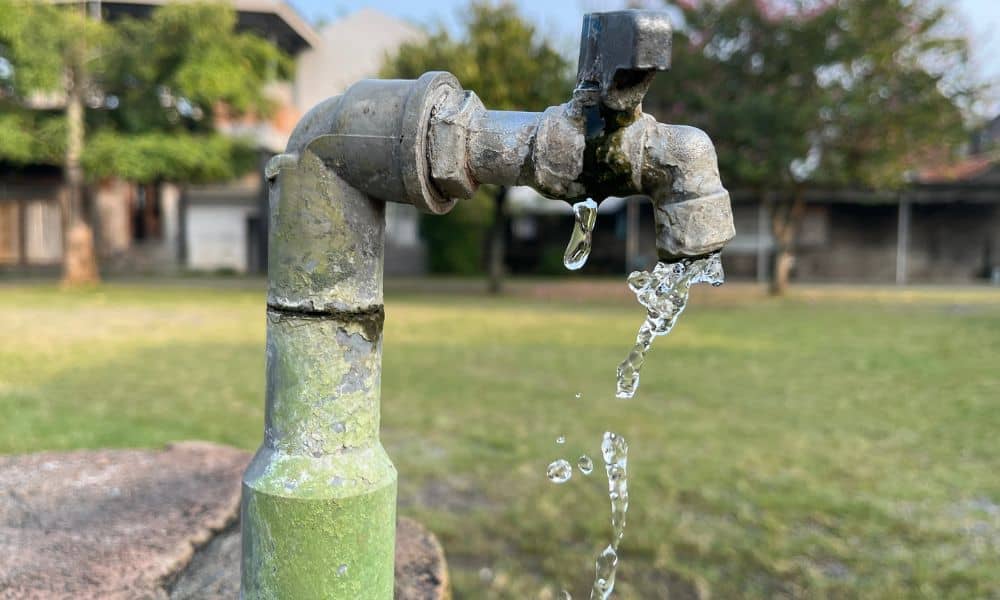
You turn on the faucet and the flow feels weak. Maybe it sputters. Maybe it coughs out air. Then you check Reddit or a neighborhood group and see people posting the same thing: “Anyone else in Grand Rapids getting low pressure right now?” If this happened to you after street or utility work, you’re not alone. As a professional engineer, I see this pattern all the time—especially during winter swings and repair season. Crews fix a break, replace a valve, or flush a hydrant. After that, homes and small businesses notice pressure changes for a short stretch.
The good news is simple. You can usually figure out what’s happening in about ten minutes. Even better, you can avoid the common mistakes that turn a small annoyance into a bigger problem.
Why low pressure shows up right after utility work
Utility crews don’t just “flip a switch” and everything returns to normal instantly. Instead, they manage a system with long pipe runs, pressure zones, hills, and older sections that react to sudden flow changes.
After utility work, air can enter the line. Crews drain a section to work safely, and air slips into the pipe. When water returns, that air moves through your plumbing. That movement causes sputtering or short bursts at the faucet.
At the same time, pressure can shift while crews stabilize the system. Valves often open in stages to avoid a pressure surge. This protects pipes, although it can leave your pressure lower for a short while.
Another common issue involves sediment in older mains. Changes in flow can loosen minerals and grit that have built up over time. That debris travels downstream and gets caught in faucet aerators and small screens. Suddenly, your “pressure problem” is really a clog.
On top of that, each building reacts differently. Older plumbing behaves one way, while newer fixtures with fine screens behave another. Because of that, two houses on the same block may see different symptoms from the same utility work.
In most cases, low pressure after repairs means the system is settling—not failing.
The 10-minute checks that help you understand the problem fast
You don’t need special tools for this. What you need is a simple way to narrow the cause without guessing.
The main goal is to answer one question quickly: does this issue affect only your place or the whole area?
Start with high-flow fixtures and nearby neighbors
First, go to a fixture with strong, direct flow. A bathtub spout works best because it usually has no screen. If you don’t have a tub, try the shower without the handheld head.
Strong flow here suggests your main supply still has pressure. Weak flow here points to a bigger issue.
Next, check with one neighbor or nearby business. A quick text or knock answers a lot. If others have the same issue, you can stop blaming your plumbing. If they don’t, focus on your building.
This step alone saves time and stress.
Compare cold water and hot water behavior
Now test cold water, then hot water. Pay attention to the difference.
When cold water runs fine but hot water struggles, the issue often involves the water heater. Air or sediment affects hot lines more after utility work.
If both hot and cold feel weak, the cause likely sits upstream. That could be a pressure zone adjustment, a partially opened valve, or a house-side shutoff issue.
Either way, this comparison helps you narrow the problem fast.
Check fixtures and aerators before assuming the worst
Next, test two sinks—usually the kitchen and a bathroom. If one works well and the other struggles, the problem lives in the fixture, not the street.
At this point, consider the faucet aerator. That small screen at the tip traps debris easily after repairs. If you feel comfortable, twist it off gently using a towel. Rinse it under water and look for grit.
Once you reinstall it, test again. Many people see pressure return right away.
For small businesses, also check screens on sprayers, coffee machines, and ice makers. These clog quickly and can shut down equipment if ignored.
After these steps, you should know where you stand:
- pressure improves as air clears
- multiple buildings still have low flow
- only your fixtures struggle
Each outcome points to a different next step.
Common mistakes that turn a small issue into a big one
When water acts strange, people rush. That’s natural. Still, a few moves cause more trouble than help.
Running hot water for a long time right away can pull sediment into the heater. That mistake creates longer-lasting problems. Instead, start with cold water and let the system clear first.
Twisting random valves also causes trouble. If you know your main shutoff, you can confirm it’s fully open. However, guessing with building valves or backflow devices often makes things worse.
Finally, avoid assuming the issue lives inside your home when neighbors have the same complaint. In that case, no amount of faucet work will fix it.
When to report the issue and when to call a plumber
Once you know where the problem sits, the decision becomes easier.
If neighbors also have low pressure, contact your city or water utility. Share your address or nearest intersection, the time the issue started, and whether you have no water or just low pressure. If discoloration doesn’t clear after a short cold-water run, mention that too.
If only your building has the problem, focus on house-side fixes first. Clean aerators, test the tub spout again, and confirm the main shutoff position if you know it.
If pressure stays low everywhere inside while neighbors run normal, call a plumber. Pressure regulators fail. Valves stick. Hidden leaks also reduce flow, and those shouldn’t wait.
For businesses, act faster. Low pressure affects restrooms, dishwashing, equipment, and sprinkler monitoring. Write down when the issue started and what you tested. That record helps professionals diagnose the issue quickly.
What a professional engineer sees behind these complaints
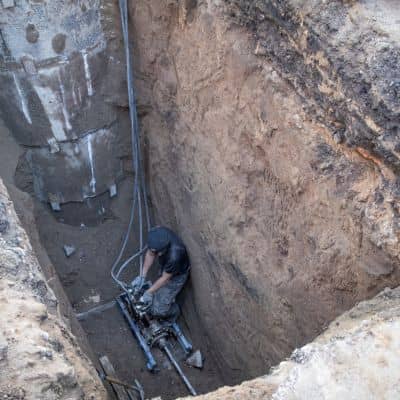
Those Reddit-style posts reveal something important. People rely on underground systems every day, yet they only think about them when something feels off.
In Grand Rapids, winter and early spring add stress through freeze–thaw cycles. Older pipes feel that stress first. Crews respond quickly to breaks, so pressure changes may appear even when repairs go well.
This matters even more for property owners and developers. Renovations, additions, and new site connections all depend on utility reliability. Without planning, utility surprises can delay schedules and inflate costs.
Good coordination reduces that risk. Reviewing utility layouts early, planning tie-ins carefully, and understanding system limits help projects move smoothly.
A simple takeaway you can remember
Low pressure after utility work doesn’t mean panic time. Start with a high-flow fixture, check with one neighbor, compare hot and cold water, and look at your aerators. In ten minutes, you’ll know whether the issue lives in your building or in the neighborhood system.
If you manage property or plan development near older utilities, think ahead. That step saves time, money, and stress later.
